
In May of this year, a financial tech company out of Silicon Valley known simply as Bolt downsized their workforce. Considerably. It’s one of those meta data tracking companies online retailers love so much. You know, like the ones who make national news every year or so for exposing all of our credit card information and passwords to hackers?
But Bolt didn’t suffer from a data breach. Their concern was for the overall valuation of the company from eleven billion just a few years ago to an estimated 300 million. That is an over ninety percent drop and the rallying cry for someone to right the ship.
Enter Ryan Breslow. Rather re-enter Ryan as he is the original founder of Bolt. He moved from a board of directors position back to the Chief Operating Officer. He is now back at the helm and attempting to correct the ships course, but not without throwing several passengers overboard. Name, the entire Human Resource Department.
Breslow had stated, "We had an HR team, and that HR team was creating problems that didn't exist… Those problems disappeared when I let them go." Aside from putting out nonexistent fires, the CEO contends the department had become redundant and bureaucratic.
He outsourced much of the work and traded the old staff out for a much smaller “People Operations” team. "HR is the wrong energy, format, and approach. People ops empowers managers, streamlines decision making, and keeps the company moving at lightning speed."
So, was Artificial Intelligence and offshore employees the answer? As it applies to Human Resources, automation and outsourcing is nothing new. Personnel departments have been contending with that for the past three decades or more.
The larger question is whether HR has remained focused on its primary purpose. Is it still effective in avoiding liability for the organization? Or has it lost its focus?
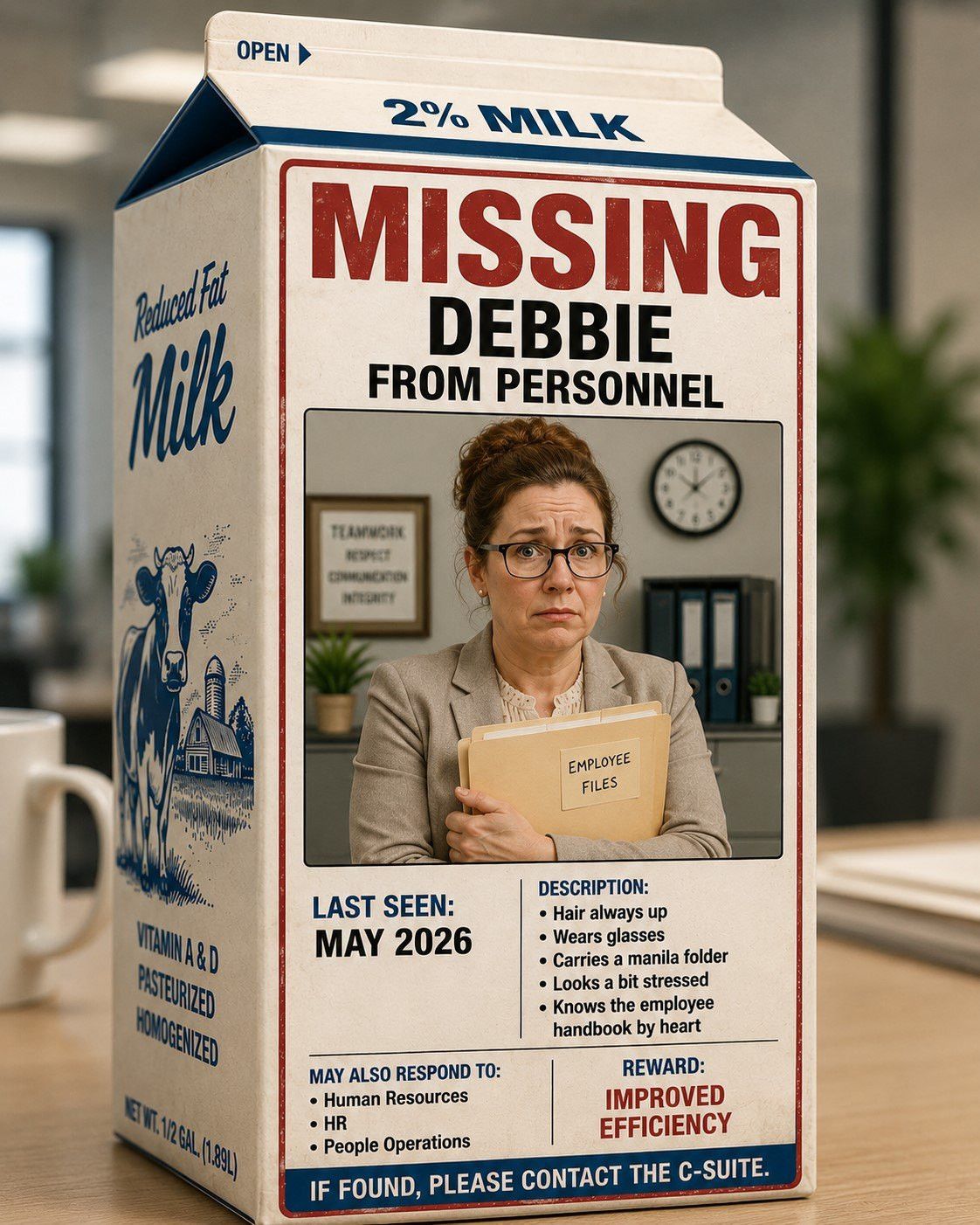
Historically, Personnel Departments existed to hire employees, maintain records, address employee relations, and help protect organizations from unnecessary liability. Over time, many departments have expanded their responsibilities. Whether that expansion represents progress or mission creep is a matter of debate.
What was monumental about Breslow's actions is the abruptness of eliminating an entire department with the wave of his hand. Undoubtedly, there is more to the story than the public realizes. But was the HR staff let go due to a lack of efficiency or was it simply cost-savings?
Either way, this is what a leader does. The one at the top must establish the strategic goals of the organization and attempt to eliminate any obstacles to achieving those goals. And for either reason, cost or value, the one at the top felt the need for a drastic change.
That’s not to say every decision coming down from the C-Suite need be so radical. But that is when delivering bad news is somewhat softened by… well, Human Resources. But that has been replaced with the People Ops team. More than likely, we will have to wait a year or so to see whether a majority of the original HR responsibilities wind up back in the PO.
That is what interests me most about the Bolt decision. Whether the company truly eliminated the HR function or simply reorganized it. If the essential personnel functions remain in place while administrative layers have been reduced, this may be less of a story about eliminating HR and more a story about refocusing it.
So, is this the first of a trend of downsizings? Is HR dead? I highly doubt it. There is still a need for employee facing professionals.
Though about the time Personnel began referring to themselves as a resource of humans, many of those departments expanded their culture into more philosophical and alternative approaches to employee interaction. As I wrote in a PREVIOUS article, no longer was it just insurance, sick days, payroll and training. In the early nineties it became… well, something else.
The real test will be whether the organization continues to effectively manage hiring, employee relations, compliance, and risk while operating with a leaner structure. Or will all those duties ultimately be given to artificial intelligence?
John Henry, the American folk hero who was said to have been pitted against a steam shovel to dig a tunnel at the dawn of the Industrial Age. It was man or machine. In the end, the large man defeats the even larger machine and saves the jobs of a hundred coworkers. But is this just nostalgic oblivion?
Perhaps, but at the heart of any company is and always will be its workers. Afterall, who will service all the robots? One thing is certain, whether it is personnel, HR, the “Talent Gallery” or whatever, the department needs to take a hard look at itself.
Stop asking candidates what jungle animal they are. Quit experimenting with new fads like interns evaluating junior executives. Drop the DEI policies that wind up offending far more people that it benefits. If it doesn’t add to the bottom line or promote a positive culture, can it.
HR can make or break an organization. Whether Bolt ultimately succeeds or fails, the question raised by Ryan Breslow's extreme decision isn't going away. If a department cannot clearly demonstrate how it contributes to corporate efficiency, someone will eventually ask why it exists at all. In a time when effectiveness will increasingly be measured against artificial intelligence, it's time to get back to basics.